Comadres en la comunidad / Comothering in Community
Sep 17, 2026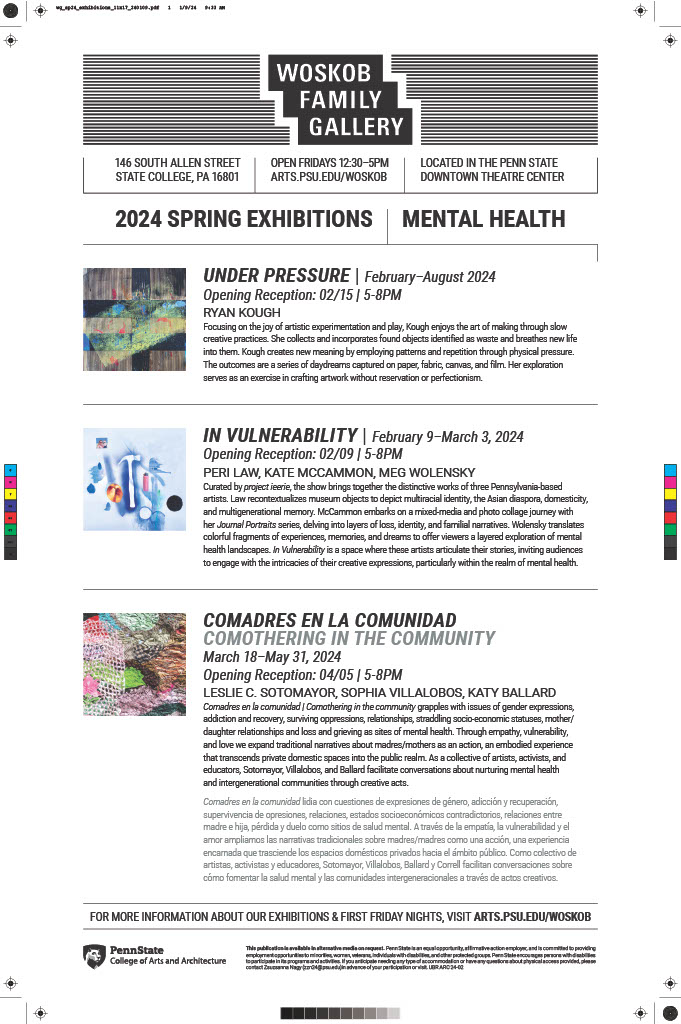
Comadres en la comunidad / Comothering in Community
A reflection on the second gathering of Madres Radicales at Woskob Gallery
Comadres en la comunidad / Comothering in Community marked the second part of Madres Radicales, extending the work from the intimacy of home into the shared space of Woskob Gallery in State College, Pennsylvania. What began as an offering among madres, artists, caregivers, activists, educators, and cultural workers continued to grow into an embodied experience of community, memory, care, and creative acts.
From the beginning, Madres Radicales has asked us to think about mothering in ways that move beyond traditional definitions. Together, we have explored motherhood as an action, a practice, and an embodied experience that reaches far beyond biological relationships. Through empathy, vulnerability, and love, we continue to ask: Who is a madre? Who mothers? What does mothering look like in our communities? What becomes possible when we expand our understanding of care?
Leslie C. Sotomayor II
These questions followed us into the gallery.
As people moved through the space, conversations emerged around family, identity, mental health, belonging, grief, resilience, and survival. What began as a project rooted in creative acts became something larger, shaped by the stories people carried with them and the connections that formed in response to the work.
The language of comadres and comothering felt especially important throughout the exhibition. For us, comadres and comothers are the people who stand beside us, who help carry what cannot be carried alone, who witness our becoming, and who remind us that survival has always been collective. Again and again, we returned to a simple truth: care is not weakness. Care is infrastructure. Care is cultural memory. For many of us, care is how we survive.
The gathering reminded us that mothering often happens beyond the boundaries of family. It moves through friendships, mentorships, chosen family, artistic collaboration, caregiving, activism, teaching, and community building. It is expressed through presence, listening, labor, storytelling, and the willingness to continue showing up for one another.
The exhibition also reaffirmed the relationship between creative acts and mental health. Many of the themes present in the work explored experiences of loss, recovery, relationships, identity, caregiving, and healing. Creativity was not treated as decoration or escape. It became a way of processing, remembering, connecting, and making meaning together. Making does not erase grief or exhaustion, nor does it solve the challenges we face. But creative acts can create moments of connection. They can help us hold difficult experiences differently. They can remind us that we are not carrying everything alone.
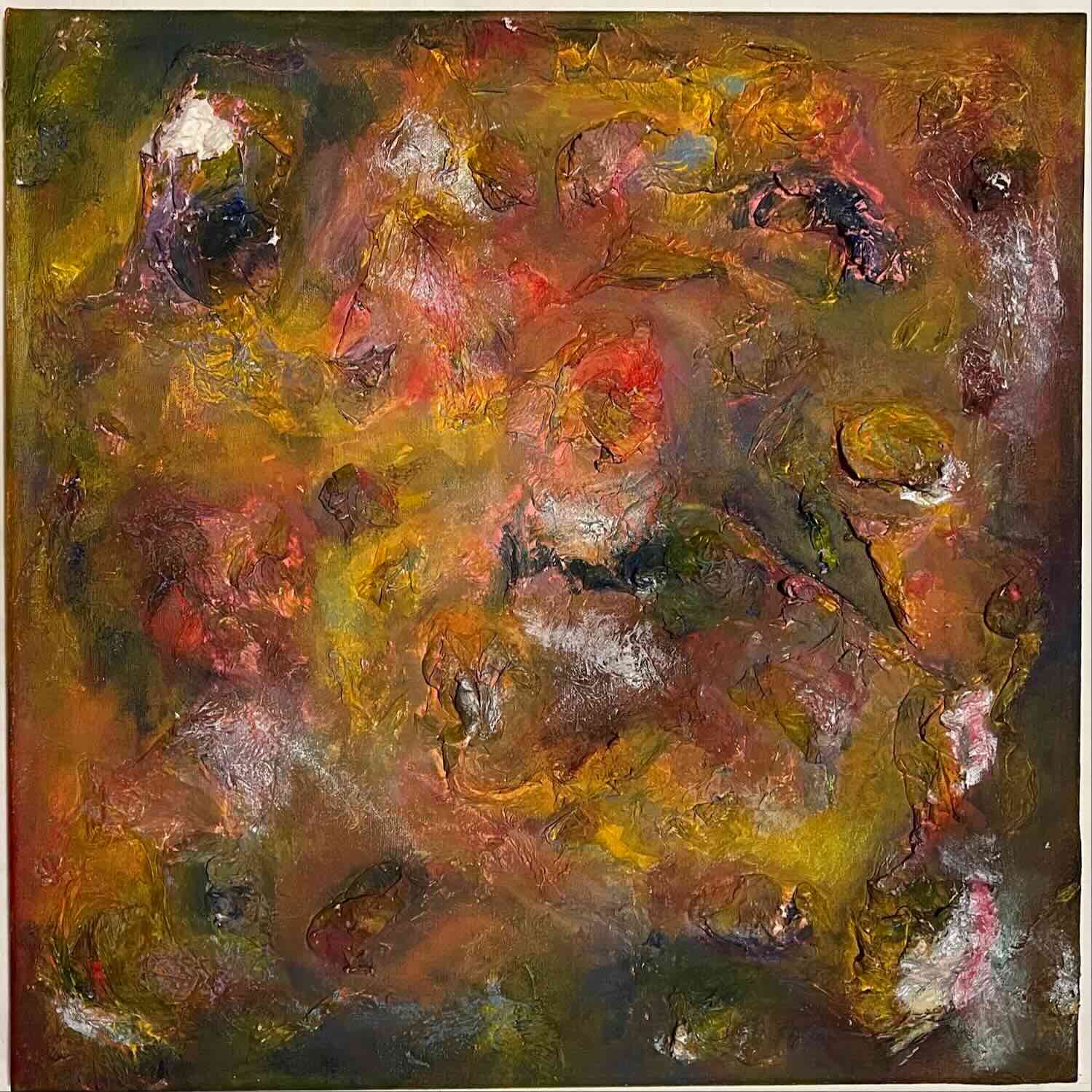
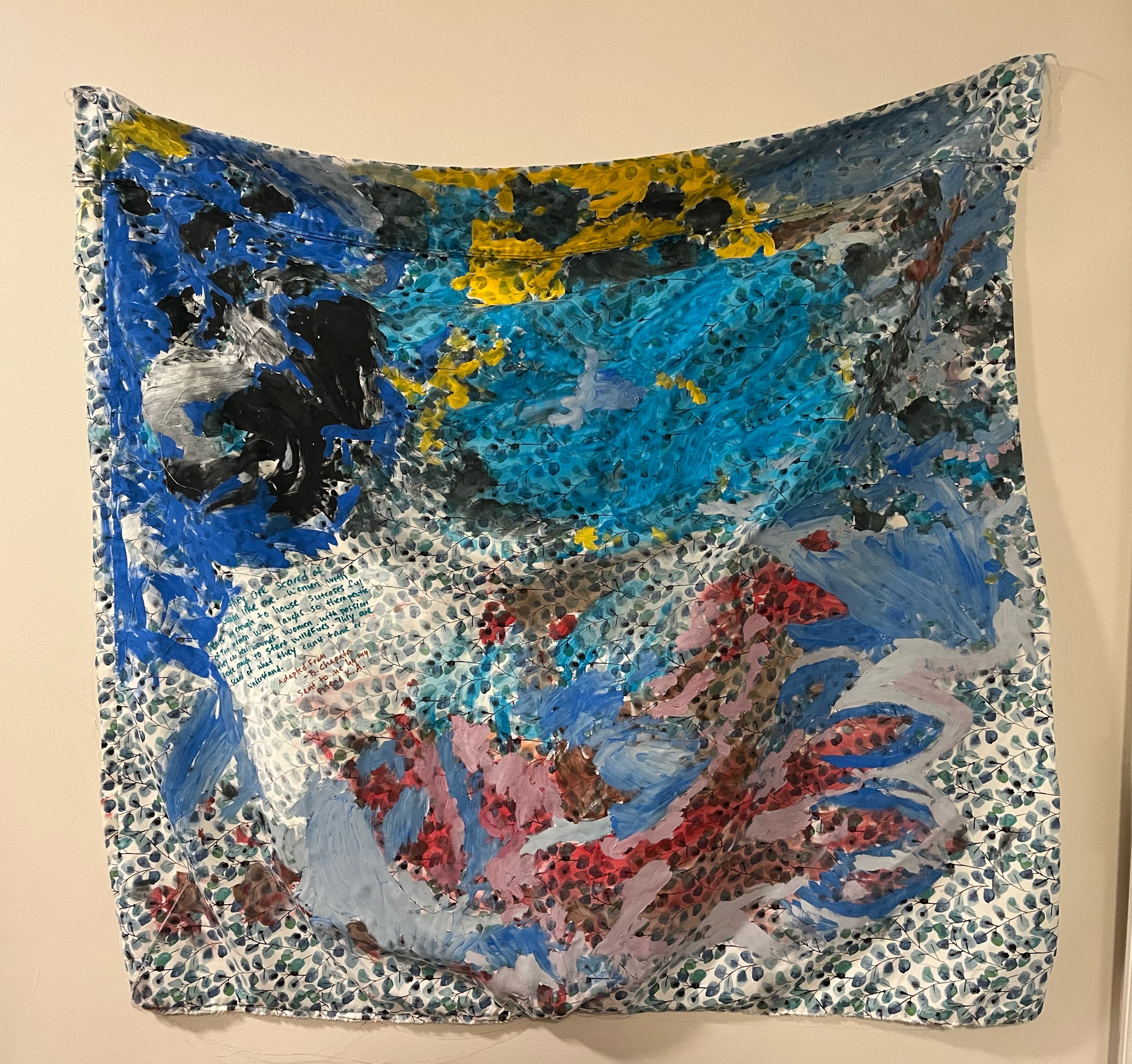
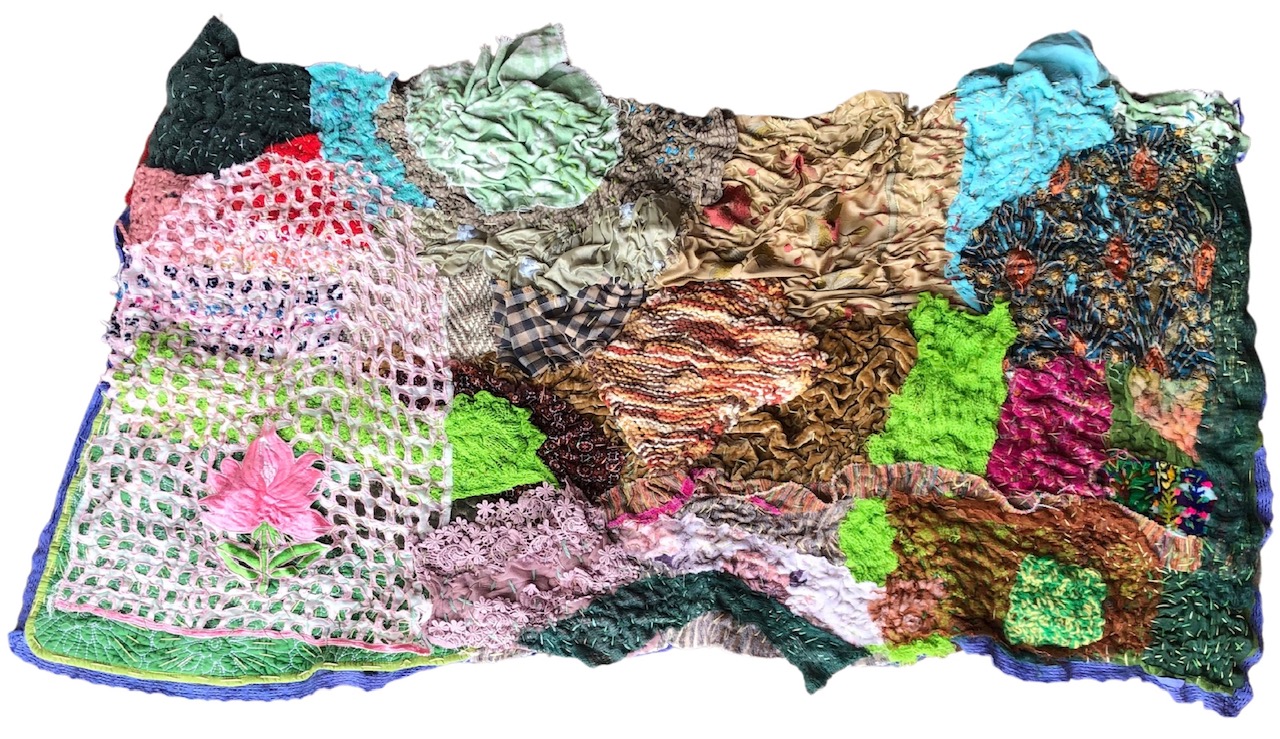
Chaos/Routine-take the damn pills
20"x20"
Mixed media on canvas
2013-2024
As with all Madres Radicales work, this exhibition emerged through collaboration. Sophia traveled to Pennsylvania, bringing her presence, labor, care, and artistic practice into the space. Leslie's curatorial vision, scholarship, and language shaped the foundation of the project. The work carried traces of all three of us, along with the communities, relationships, and experiences that continue to shape it.
What became especially clear at Woskob was that the project can carry across distance. We no longer live in the same place, and much of our collaboration happens across states, schedules, responsibilities, and different seasons of life. Yet the work continues. It travels through conversation, shared ideas, creative acts, trust, and a commitment to continue showing up for one another. The exhibition reminded us that meaningful collaboration is not dependent on proximity. It is built through relationships sustained over time.
The community that gathered around the exhibition added another layer of meaning. Conversations emerged around family, identity, mental health, belonging, cultural memory, and the ways people create support systems for themselves and one another. The gallery became more than a site for displaying artwork. It became a place where stories were exchanged, experiences were validated, and people recognized pieces of themselves in the work and in each other.
Looking back, Comadres en la comunidad / Comothering in Community feels like an important continuation of Madres Radicales. It expanded conversations that began in private spaces and brought them into a public dialogue. It reminded us that the questions at the center of this project remain deeply relevant and deeply human.
The gathering at Woskob Gallery reminded us that none of this work happens alone. It is sustained through relationships, collaboration, trust, and the willingness to keep showing up for one another. Over the years, Madres Radicales has grown through conversations, shared experiences, creative acts, and community. What emerged in the gallery was not simply an exhibition, but a reflection of those relationships and the care that continues to hold them together.
The work is never about any one of us. It lives in what we build together, what we carry together, and what we make possible together. Through creative acts, care, and community, we continue creating space for one another and for those who join us along the way. In the end, that sense of togetherness may be the most important thing Madres Radicales has taught us: that care expands when it is shared, and that the work becomes stronger when we carry it together.
Sophia Villalobos
WTF: The Other F Word is a warm, artist-led space for curious creatives ready to trust themselves, honor their boundaries, and build a practice that feels honest, sustainable, and fully their own.
Stay in the loop
Get new episodes, notes, and artist-led reflections from WTF: The Other F Word. Thoughtful updates for creatives exploring self-trust, care, and feminist practice.
Occasional emails only. No spam, no gatekeeping, and you can unsubscribe anytime.